Launch offer — valid today only

📄 Digital book in PDF · read it on your phone or print it

The Concrete Field Testing Exam in Drawings Every Test Step by Step, in Order

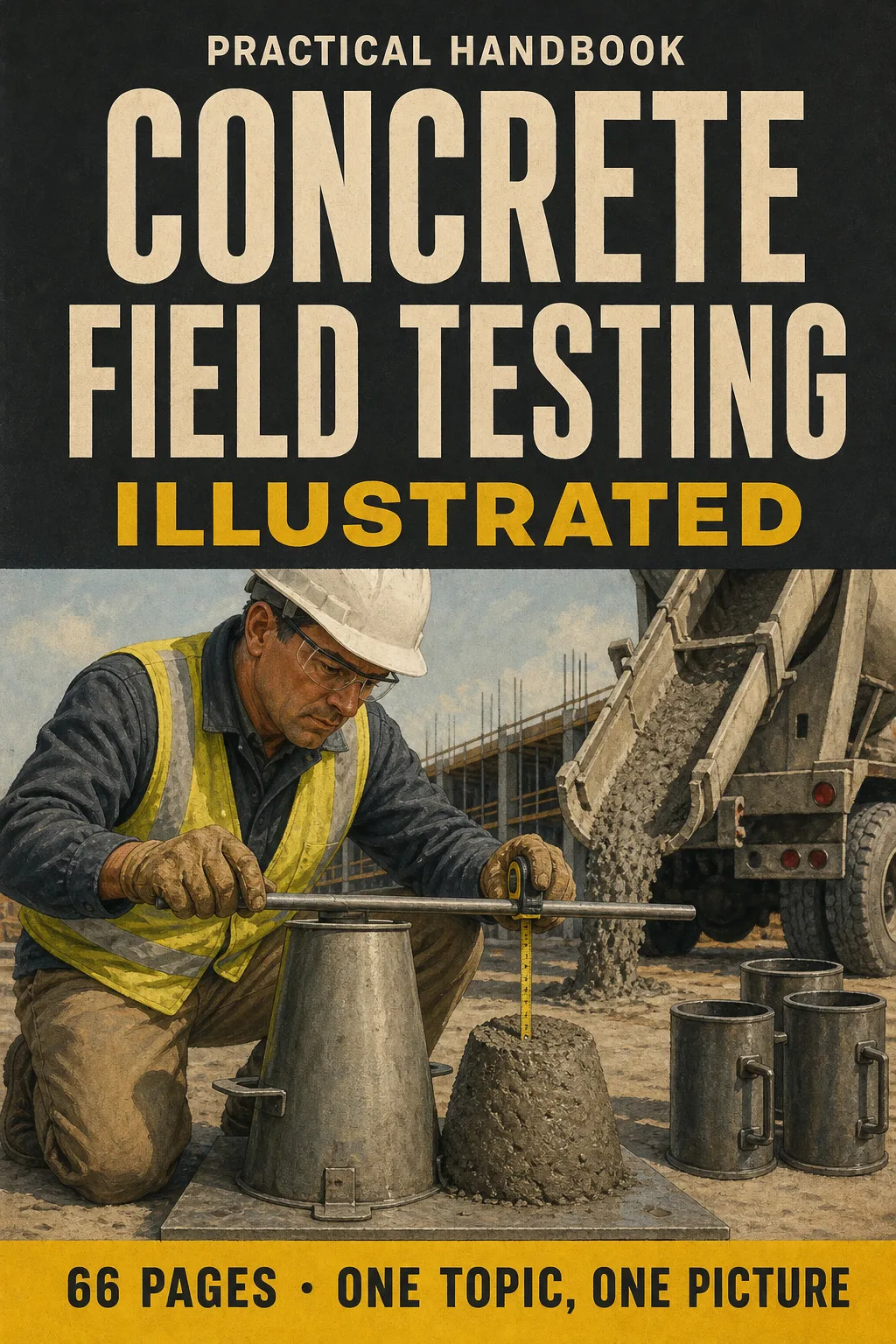
Sampling, temperature, slump, air content, density, yield, cylinders and beams. Each topic has its own page: the drawing first, then what you need to remember. 66 illustrated pages.

GET THE ILLUSTRATED BOOK

🔒 Secure checkout · PDF by email · 30-day guarantee

Every topic, its own pageEach field test drawn step by step, with the explanation right beside it
66 illustrated pages8 parts, from the exam and your toolkit to the night before the performance exam
Up-to-date sourcesChecked against the current editions of ASTM C172, C1064, C143, C231, C173, C138 and C31, with the matching AASHTO methods
PDF by emailFormat

Look Inside the Book

Every page has one big drawing and a box with the numbers and steps you need to know:

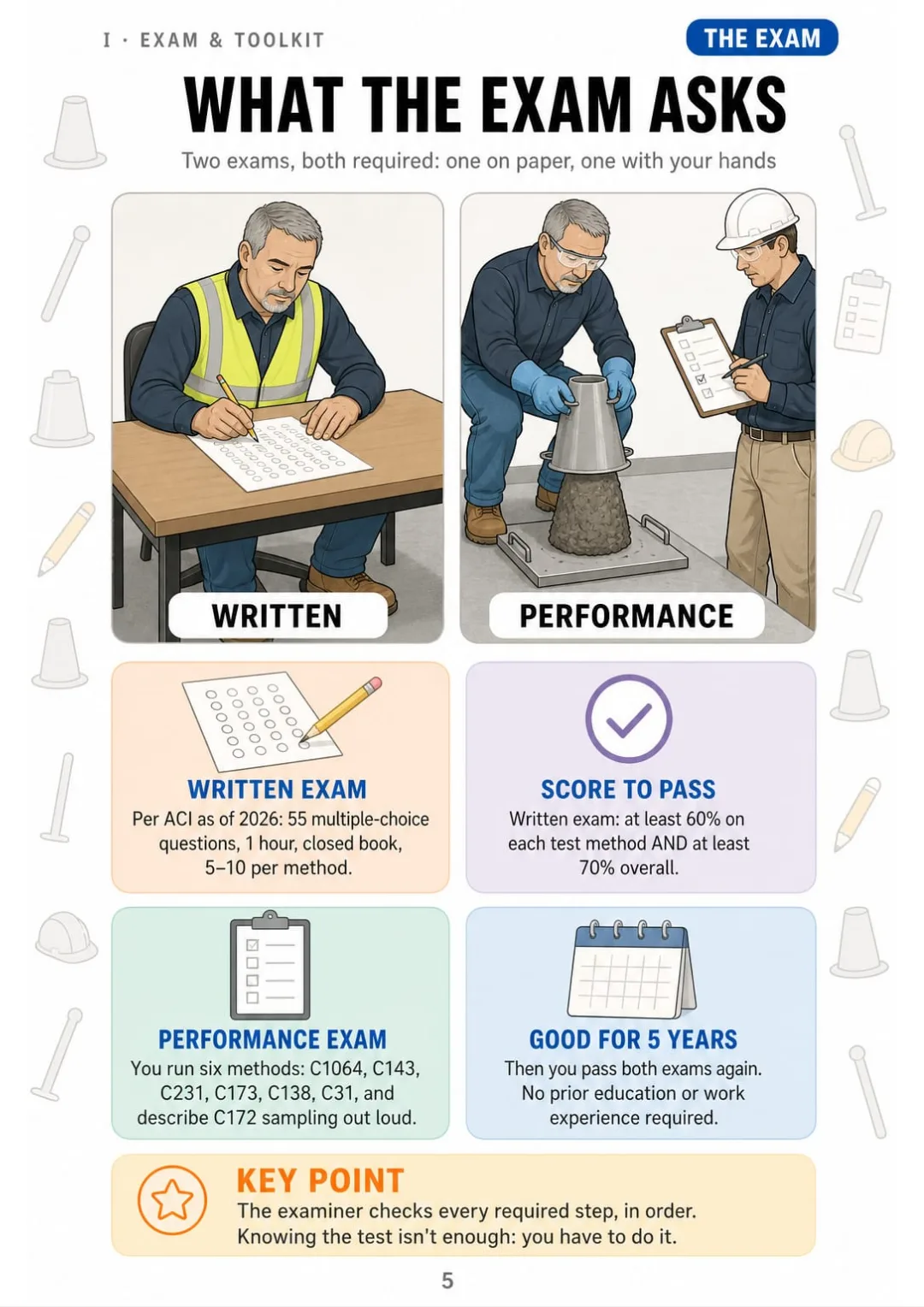
Written: 55 questions, 60% per method, 70% overall · Performance: 6 methods + C172 out loud
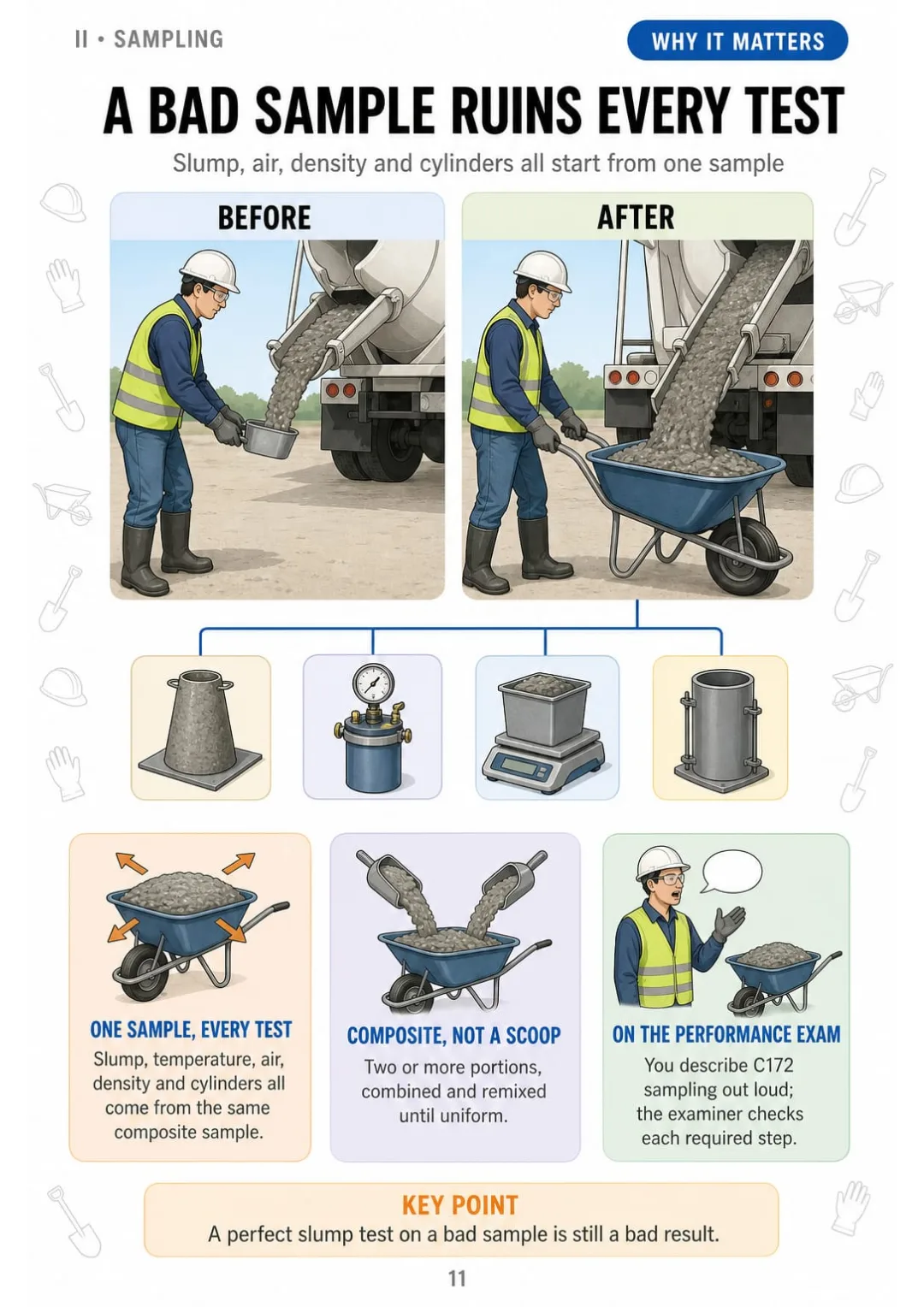
One composite sample feeds slump, air, density and cylinders: get it right first.
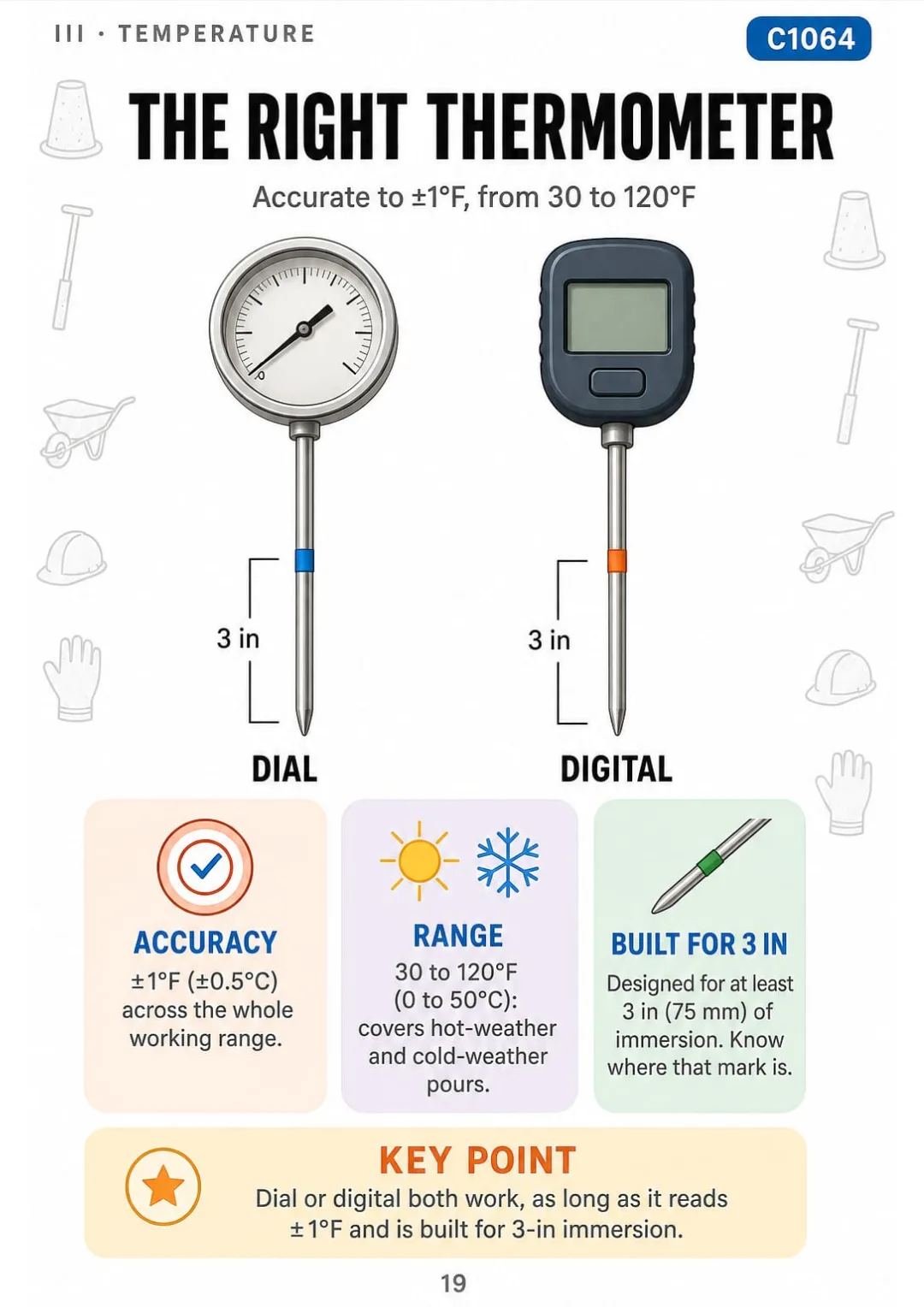
ASTM C1064 thermometer: ±1°F (±0.5°C) over 30–120°F, designed for 3 in (75 mm) immersion.
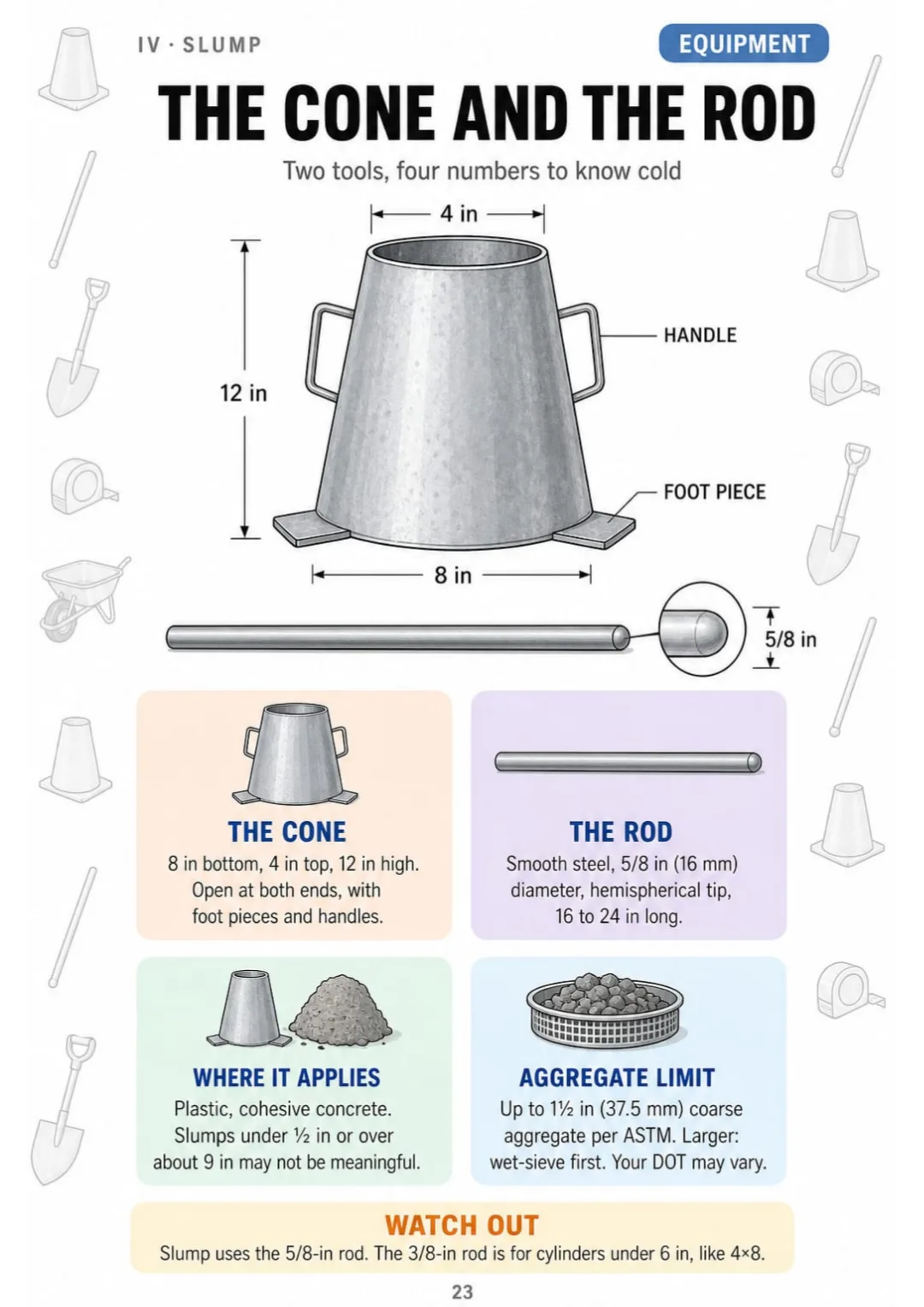
Cone 8 in × 4 in × 12 in, rod 5/8 in with a hemispherical tip.
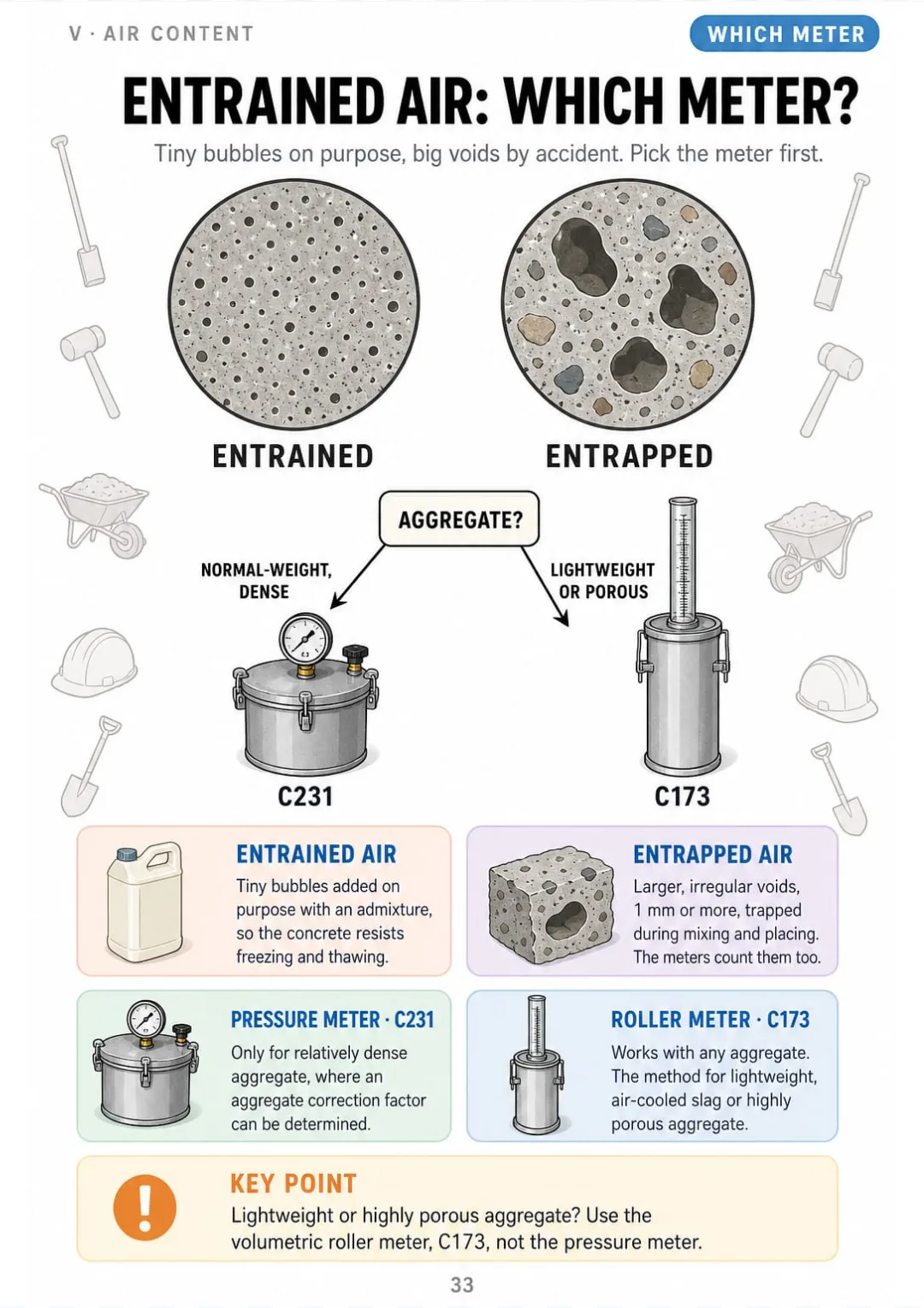
C231 for dense aggregate, C173 for lightweight or porous: the choice on one page.
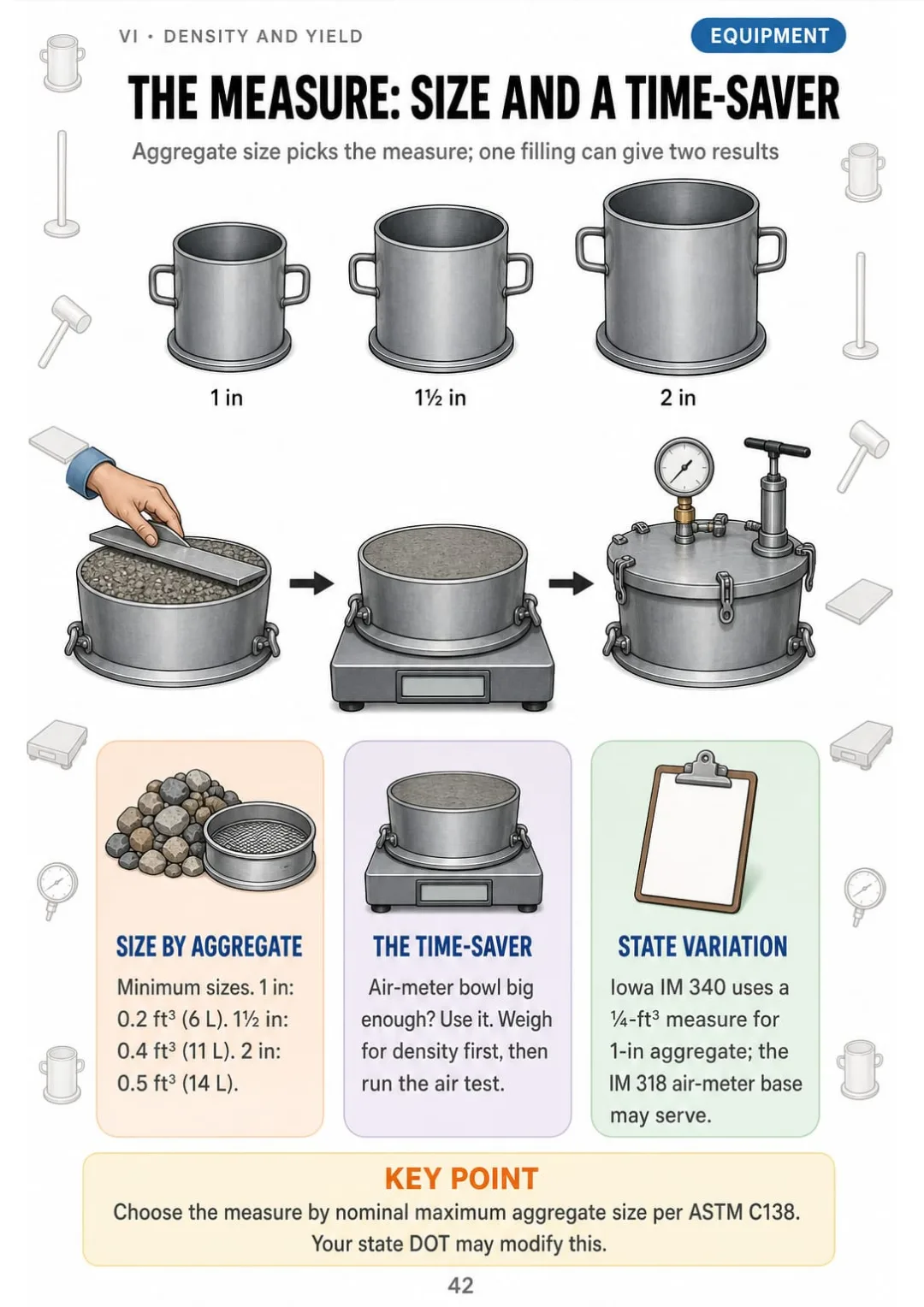
ASTM C138 measure sizes: 0.2 ft³ up to 1 in aggregate, 0.4 ft³ for 1½ in, 0.5 ft³ for 2 in.
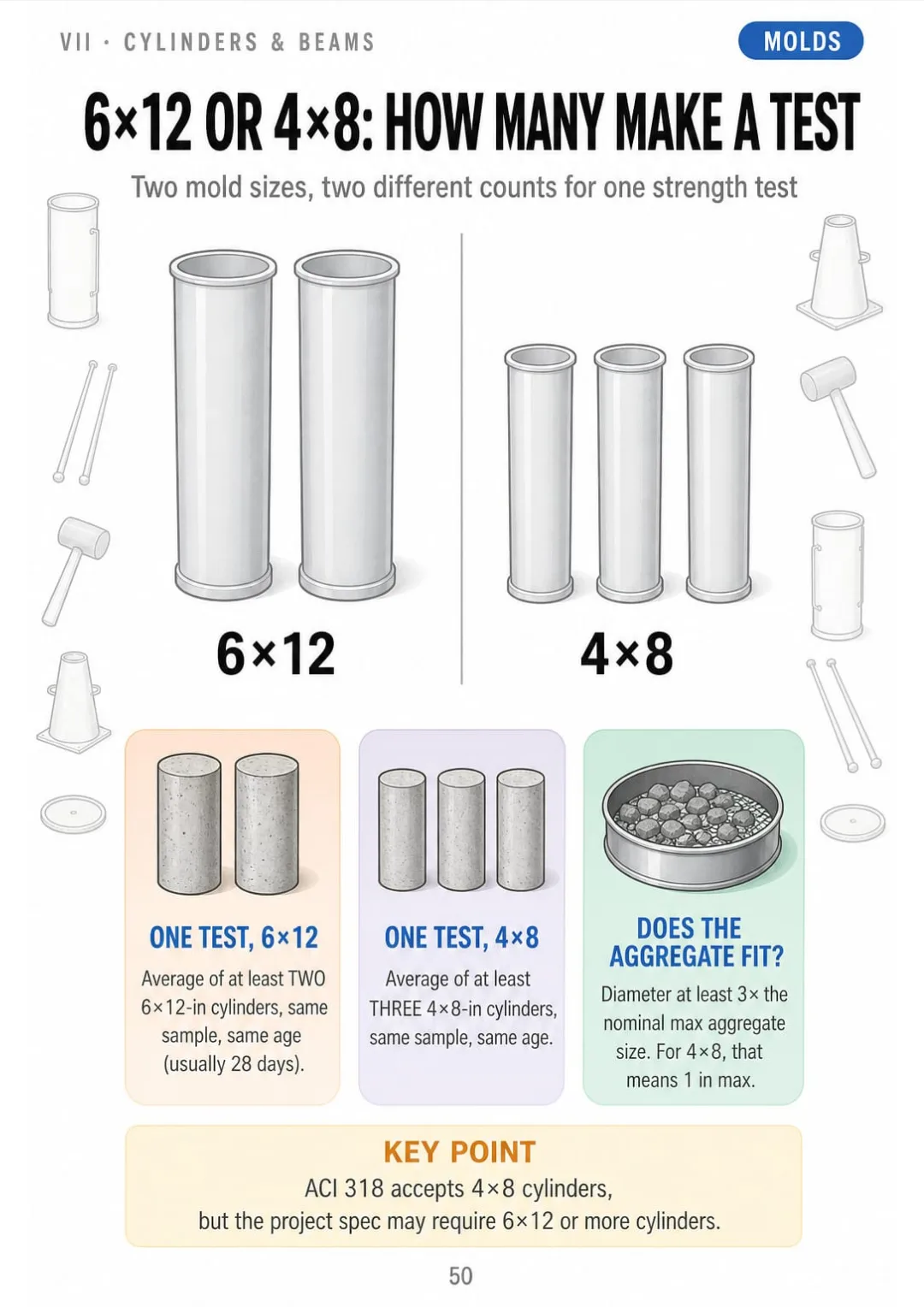
One strength test = at least 2 cylinders of 6×12 in or 3 of 4×8 in
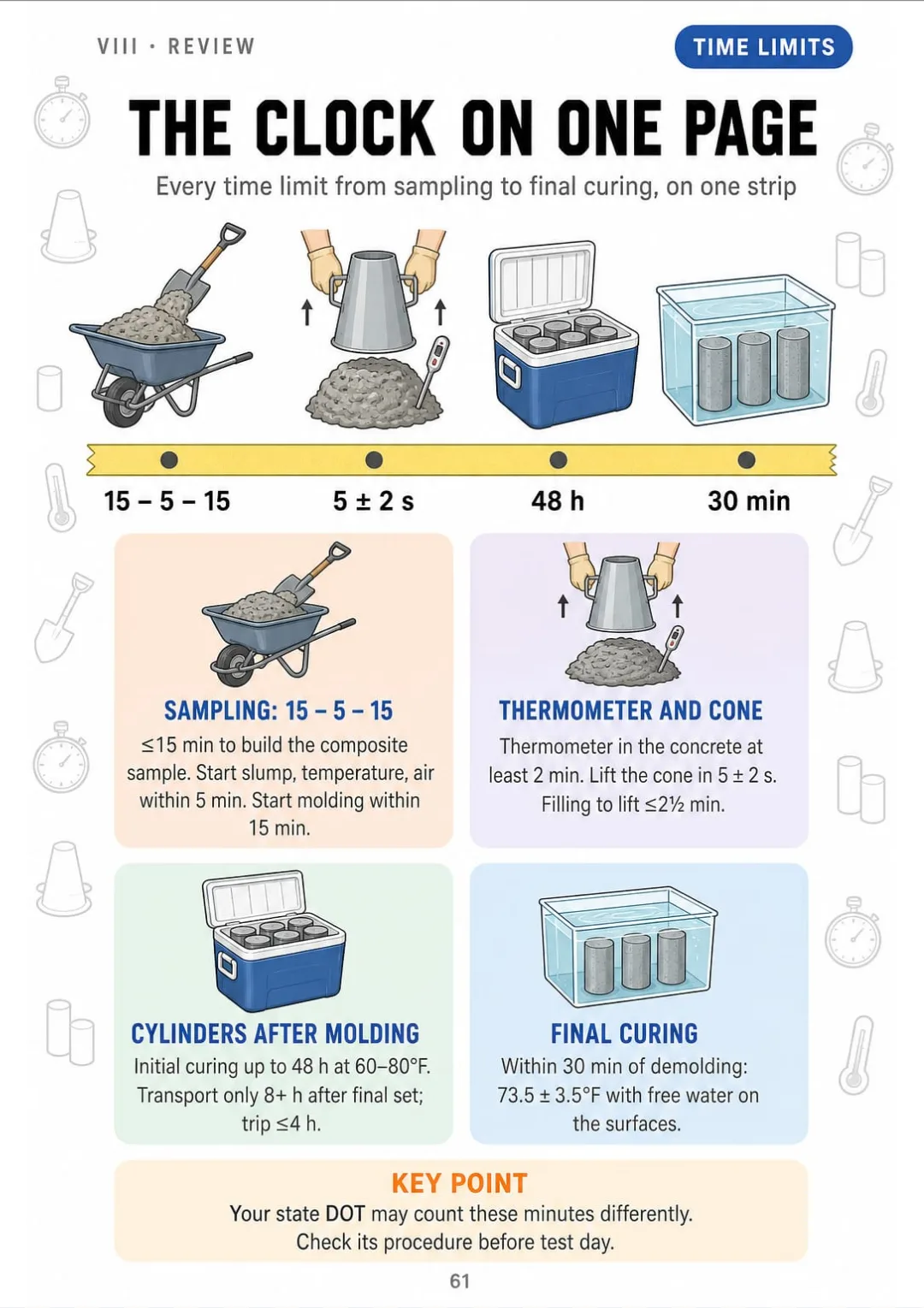
15 min, 5 min, 15 min, 2 min, 5 ± 2 s, 2½ min, 48 h, 8 h, 4 h, 30 min

Swipe to see more →

These are real pages from the book. The table of contents is the full one: 8 parts and 62 topics.

The Problem Isn't You. It's How It Was Explained to You.

You're at the performance exam station. The examiner hands you a thermometer and asks: is this one good enough for the test?

You read about it. But the manual puts it all in one long paragraph: accuracy, range, immersion depth. There's nothing to see, so nothing sticks.

ASTM C1064 thermometer: ±1°F (±0.5°C) over 30–120°F, designed for 3 in (75 mm) immersion.

In the book, the thermometer is a drawing: the 30–120°F range marked on the scale, ±1°F in a box, and a line 3 inches up the stem showing how deep it goes into the concrete.

Every other test works the same way: sampling from the truck, the slump cone, the air meter, the density measure, the cylinder molds. Each one has its own page.

You look, you get it, and you do it in order without going back to the manual.

COMPARE FOR YOURSELF

Same Topic, Two Ways to Study It

THIS
  • The manual: line after line
  • Field tests explained only in words
  • You walk into the exam with doubts
The sample shall be representative of the entire batch. When obtained from a revolving drum truck mixer, two or more portions shall be taken at regularly spaced intervals during discharge of the middle part of the load, and not more than 15 minutes shall elapse between the first and last portions. The portions shall then be carried to the testing location, combined, remixed with a shovel only as needed for uniformity, and shielded from sun, wind and contamination prior to testing.
FOR THIS
  • Each test in one drawing
  • The numbers in a box
  • You see it and you get it
One composite sample feeds slump, air, density and cylinders: get it right first.
CONTENTS

Take a Look at the 8 Parts and 62 Topics

The exam and your toolkit, sampling, temperature, slump, air content, density and yield, cylinders and beams, and a final review: 66 pages, all illustrated

IThe Exam and Your Toolkit · pp. 5-10
  1. What the Field Testing Technician Exam Asks
  2. ASTM or AASHTO: Same Test, Two Numbers
  3. A Test Day, Always in the Same Order
  4. The Units You Work In
  5. Your Equipment, Drawn and Labeled
  6. Wet Concrete Burns: Protect Yourself
IISampling (ASTM C172) · pp. 11-18
  1. A Bad Sample Ruins Every Test After It
  2. Sampling From a Truck Mixer
  3. Sampling From Pumps, Conveyors and Paving Mixers
  4. How Much Concrete You Need
  5. Combine, Remix, Protect
  6. The Sampling Clock: 15 – 5 – 15
  7. When Aggregate Is Too Big: Wet-Sieving
  8. Sampling Mistakes, Before and After
IIITemperature (ASTM C1064) · pp. 19-22
  1. The Right Thermometer
  2. The 3-Inch Rule
  3. Wait, Read, Record
  4. Checking Your Thermometer, and Common Mistakes
IVSlump (ASTM C143) · pp. 23-32
  1. The Cone and the Rod
  2. Setup: Damp Cone, Firm Base, Feet Down
  3. Three Layers by Volume, Not Height
  4. Rodding the First Layer
  5. Second and Third Layers
  6. Strike Off and Clean the Base
  7. The Lift: 12 Inches in 5 ± 2 Seconds
  8. Measuring Slump to the Nearest ¼ Inch
  9. Shear or Collapse: What to Do
  10. Slump Mistakes, Before and After
VAir Content (ASTM C231 and C173) · pp. 33-41
  1. Entrained Air and Which Meter to Use
  2. The Type B Pressure Meter, Labeled
  3. Filling the Bowl
  4. Strike Off and Clamp the Cover
  5. Water Through the Petcocks
  6. Pump to the Initial Pressure Line
  7. Release, Tap, Read to 0.1%
  8. The Volumetric (Roller) Meter
  9. Air Test Mistakes, Before and After
VIDensity and Yield (ASTM C138) · pp. 42-49
  1. The Measure: Size and a Time-Saver
  2. Filling the Measure
  3. Strike Off with the Plate, Then Weigh
  4. Calculating Density: Worked Example
  5. Yield and Relative Yield: Worked Example
  6. Air by Mass and Cement Content
  7. Calibrating the Measure
  8. Density Mistakes, Before and After
VIICylinders and Beams (ASTM C31) · pp. 50-60
  1. 6×12 or 4×8, and How Many Make a Test
  2. Where to Mold
  3. Rodding a 6×12 Cylinder
  4. Rodding a 4×8 Cylinder
  5. Finish, Cap and Label
  6. Initial Curing: The First 48 Hours
  7. Moving Cylinders to the Lab
  8. Final Curing: 73.5 ± 3.5°F with Free Water
  9. Standard-Cured vs. Field-Cured
  10. Flexural Beams
  11. Cylinder Mistakes, Before and After
VIIIReview and Practice · pp. 61-66
  1. The Clock on One Page
  2. The Numbers to Memorize
  3. Reading the Batch Ticket
  4. Out of Spec: The Check Test
  5. Filling Out the Field Data Sheet
  6. The Night Before the Performance Exam

One Page, One Topic, All Clear

Think of it this way:

The truck is on site, the chute is running, and you have fifteen minutes to get your sample and five to start the slump.

In the book, you open the sampling clock page and see 15 – 5 – 15 drawn as a timeline, from the first portion to the first cylinder.

C231 for dense aggregate, C173 for lightweight or porous: the choice on one page.

Same with the slump cone, the pressure meter, the density measure and the cylinder molds: each one on its own page, in the order you use it.

Concrete Field Testing Illustrated is 66 illustrated pages in 8 parts, one topic per page, with a review at the end: the clock, the numbers to memorize, the batch ticket and the field data sheet.

What you see drawn, you don't have to memorize.

What's Inside Concrete Field Testing Illustrated:

Ipp. 5-10

The Exam and Your Toolkit

What the written and performance exams ask, ASTM vs. AASHTO numbers, a test day in order, US units, your equipment labeled and how to protect your skin from wet concrete.

IIpp. 11-18

Sampling (ASTM C172)

Why sampling comes first, sampling from trucks, pumps and paving mixers, how much you need, combining and remixing, the 15–5–15 clock, wet-sieving and the most frequent mistakes.

IIIpp. 19-22

Temperature (ASTM C1064)

The right thermometer, the 3-inch rule, how long to wait before reading and how to check your thermometer.

IVpp. 23-32

Slump (ASTM C143)

Cone and rod, setup, three layers by volume, rodding each layer, strike-off, the 12-inch lift in 5 ± 2 seconds, measuring to ¼ inch, shear and collapse.

Vpp. 33-41

Air Content (ASTM C231 and C173)

When air is entrained and which meter to use, the Type B pressure meter step by step, reading to 0.1% and the volumetric roller meter.

VIpp. 42-49

Density and Yield (ASTM C138)

Measure sizes, filling and strike-off with the plate, density, yield and relative yield with worked examples, air by mass, cement content and calibration.

VIIpp. 50-60

Cylinders and Beams (ASTM C31)

6×12 or 4×8, where to mold, rodding each size, finishing and labels, initial and final curing, moving cylinders to the lab, field-cured cylinders and flexural beams.

VIIIpp. 61-66

Review and Practice

The clock and the numbers on one page each, reading the batch ticket, the check test when concrete is out of spec, the field data sheet and the night before the performance exam.

At the end of the book: Worked density and yield examples, before/after drawings of the most frequent mistakes, and the clock and key numbers on one page each.

Plus: 2 Free Books

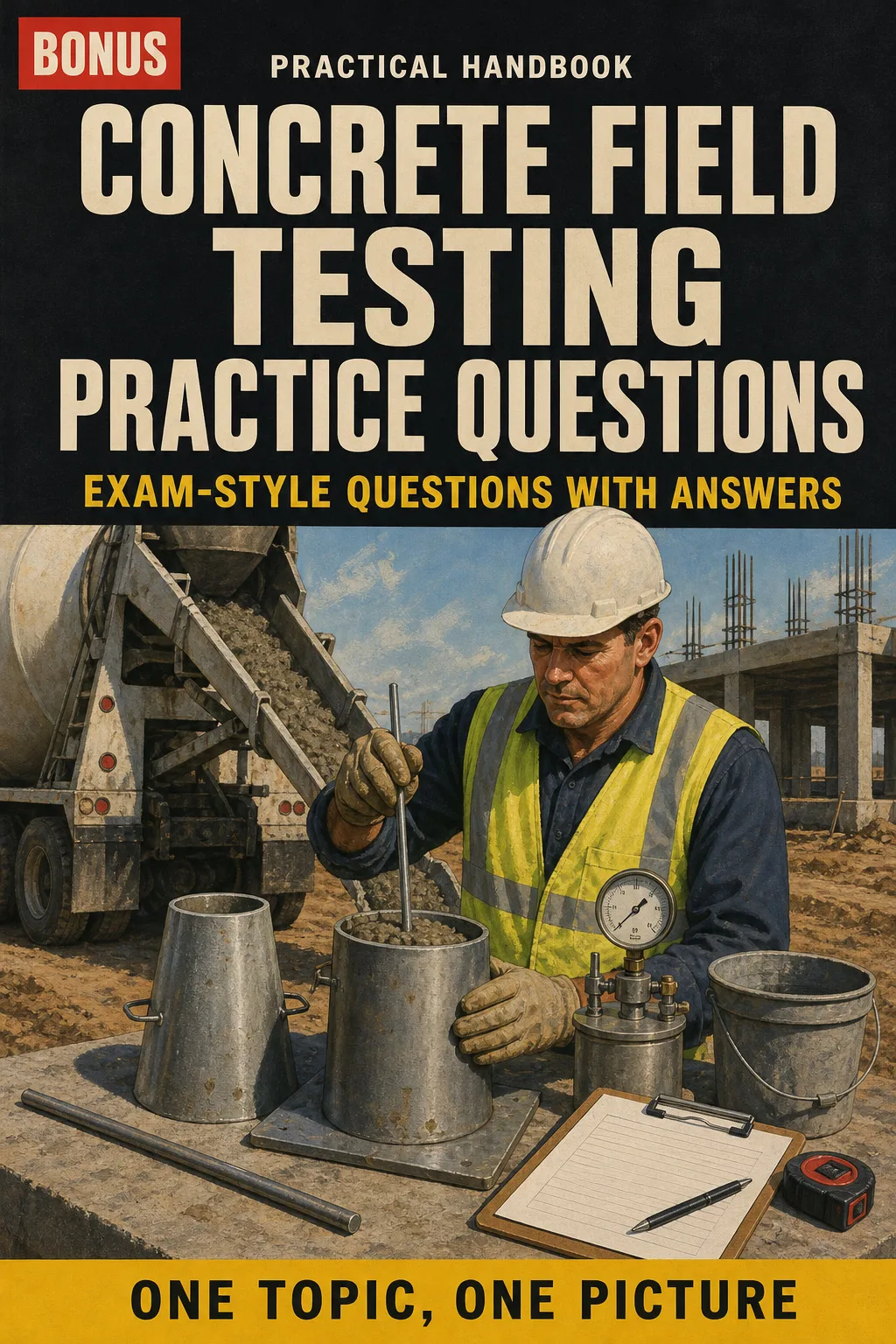
Concrete Field Testing Practice Questions: Exam-Style Questions with Answers

BONUS 1: «Concrete Field Testing Practice Questions: Exam-Style Questions with Answers»

Value on its own: US$ 17.90

Test yourself on sampling, slump, air, unit weight and cylinders before the written exam, with every answer explained in one or two lines.

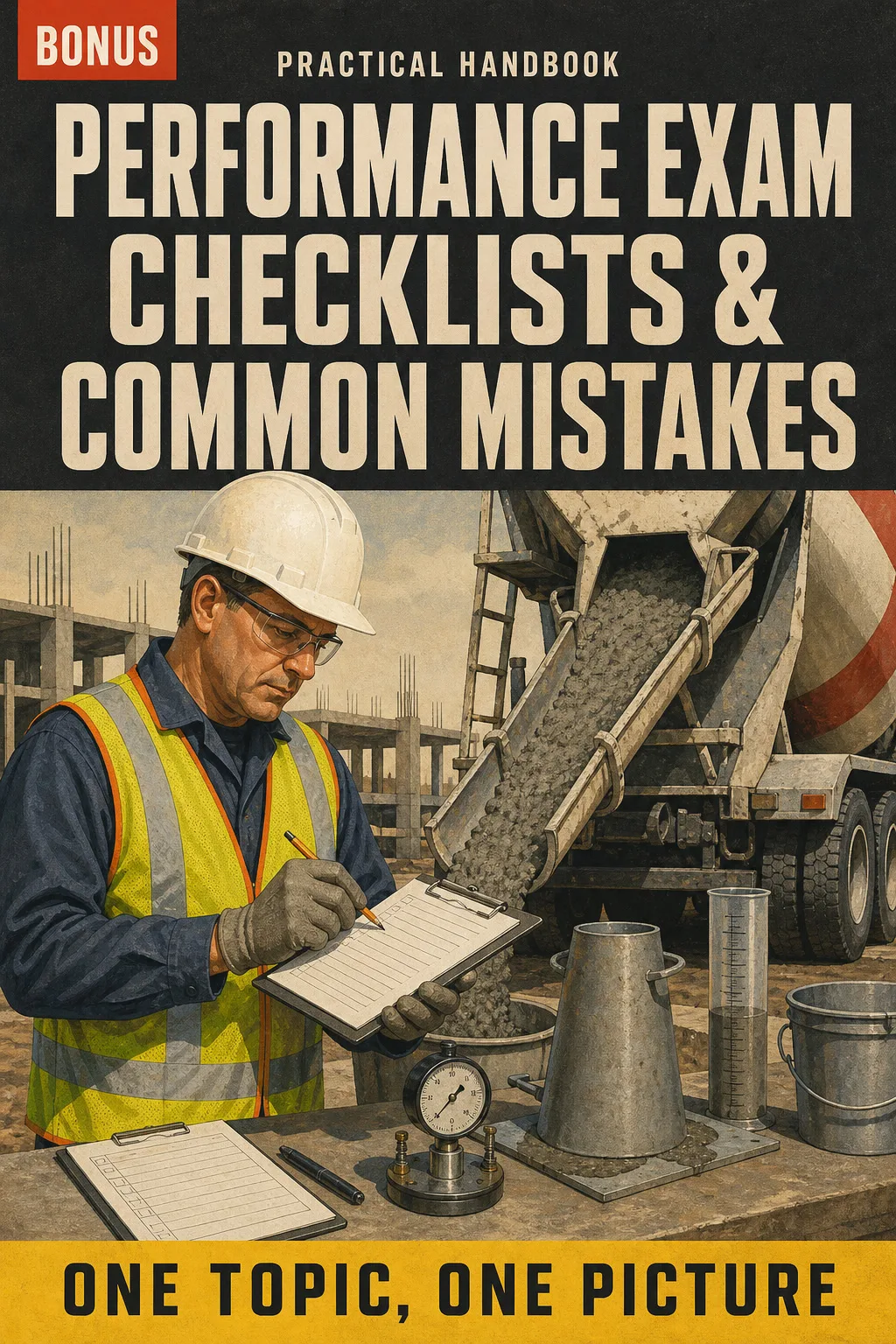
Performance Exam Checklists & Common Mistakes

BONUS 2: «Performance Exam Checklists & Common Mistakes»

Value on its own: US$ 14.90

One-page checklists for each field test, in order, plus the most frequent mistakes drawn before and after, so you can review the night before.

Concrete Field Testing Illustrated with 2 Free Books

  • Concrete Field Testing Illustrated: 66 illustrated pagesUS$ 63
  • BONUS 1: Concrete Field Testing Practice Questions: Exam-Style Questions with AnswersUS$ 17.90
  • BONUS 2: Performance Exam Checklists & Common MistakesUS$ 14.90
  • High-resolution PDF to printIncluded
Total value US$ 95.80
YOUR PRICE:
US$ 27
You save US$ 68.80
YES, I WANT CONCRETE FIELD TESTING ILLUSTRATED FOR US$ 27

📄 This is a digital PDF book sent to your email: nothing is printed or shipped.

Secure purchaseEncrypted payment30-day guarantee

PDF by email: We email you Concrete Field Testing Illustrated as a PDF, together with the two free books. It's a single payment: no installments, no extra charges.

Who This Book Is For

You're studying for the certification

You're studying for the certification

Each field test on its own page, in the order you'll do it. You learn the step by looking at it, not by rereading.

Your exam is a few weeks out

Your exam is a few weeks out

The clock and the numbers to memorize on one page each, plus the practice questions and the checklists for the night before.

You already work around concrete

You already work around concrete

Print the pages and keep them in the truck: layers, strokes, times and measure sizes, right there when the inspector asks.

Everything You Get Today

US$ 95.80US$ 27
YES, I WANT CONCRETE FIELD TESTING ILLUSTRATED FOR US$ 27

📄 This is a digital PDF book sent to your email: nothing is printed or shipped.

30DAYS
GUARANTEE

30-Day Guarantee

Try Concrete Field Testing Illustrated for 30 days, bonus books included.

We refund everything if the file won't open, if the book isn't what you see here, if you were charged twice or if the email doesn't arrive. Just email us.

You pay once. No subscriptions.

Frequently Asked Questions

Is it for me if my employer or my state DOT wants me certified in concrete field testing?

Yes, if your certification is built on the standard field tests: sampling (ASTM C172), temperature (C1064), slump (C143), air content (C231 and C173), density/unit weight (C138) and cylinders (C31). That's what the ACI Concrete Field Testing Technician – Grade I exam covers, and most state DOT programs use the same methods. If your DOT uses AASHTO numbers, every page shows the matching T method. Some DOTs add their own rules, so check your program's list of methods: if they're on it, they're in the book.

Where does the content come from?

From the current editions of the ASTM methods C172, C1064, C143, C231, C173, C138 and C31, plus C94 for batch tickets and the matching AASHTO methods. Everything is paraphrased and drawn, not copied.

Is this official material?

No. It's an independent illustrated study guide. It isn't published, approved or endorsed by ACI, ASTM, AASHTO or any state DOT, and it doesn't give you a certificate: certification only comes from passing the written and performance exams of your program.

Does it replace the course or the hands-on training?

No. You still need the program your employer or DOT asks for and hands-on practice with real equipment. What it adds to your course manual: every step drawn in the order you do it, the numbers in a box on each page (layers, strokes, times, measure sizes), every time limit on one page, and checklists to walk through the performance exam step by step.

Are the practice questions the ones on the exam?

No. They're written for this book, in exam style, so you can check what you know. They're not official exam questions.

When and how do I get it?

The book and the 2 bonus books come as PDFs by email, to the address you enter at checkout.

Do I have to pay every month?

No. It's a one-time payment.

Can I have it on paper?

Yes. It's a PDF you can print at home or at a print shop and take to the jobsite.

How does the refund work?

You have 30 days. We refund everything if the file won't open, if the book isn't what you see on this page, if you were charged twice or if the email doesn't arrive: just email us.
Before You Close This Page

No more rereading that doesn't stick.

The slump cone, the air meter, the cylinders: you see them drawn, and that's it.

You walk into the exam knowing where everything is.

Drawings make studying faster.

The book is right below.

One-time payment: US$ 27 · Guarantee: 30 days · PDF by email

YES, I WANT CONCRETE FIELD TESTING ILLUSTRATED FOR US$ 27

📄 This is a digital PDF book sent to your email: nothing is printed or shipped.